When Account Recovery Becomes Data Surrender: A Privacy Cautionary Tale
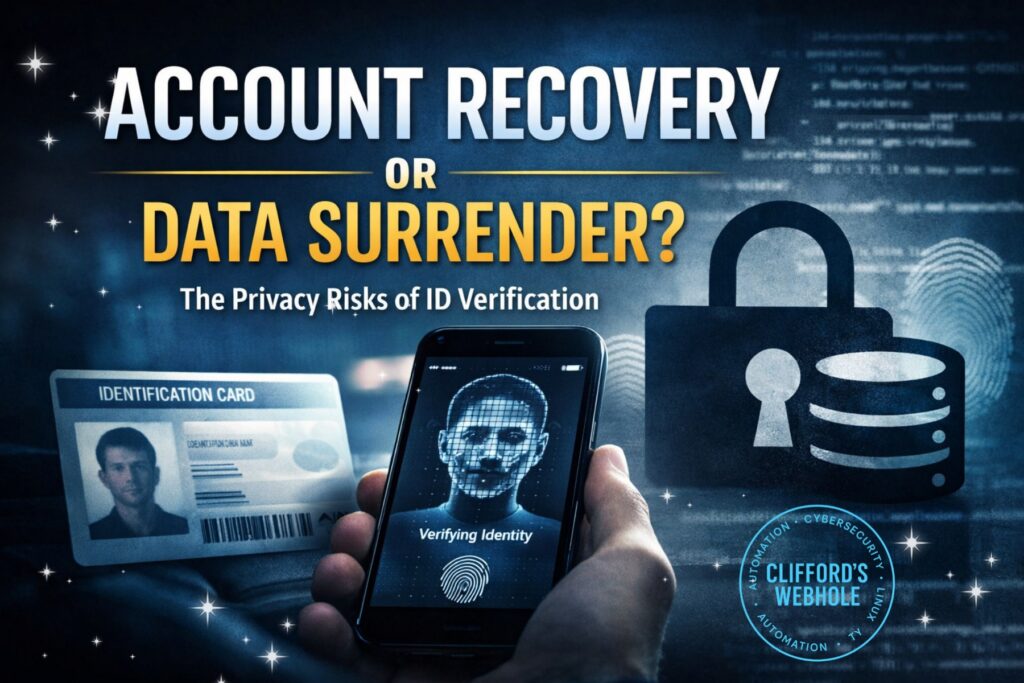
Over the last few years, more platforms have started outsourcing “account recovery” and verification to third-party identity services. On paper, this sounds reasonable. In practice, it creates a serious privacy imbalance that most users don’t realize until it’s too late.
A growing number of people report being locked out of accounts and then asked to upload government ID and live biometric photos to regain access. The assumption is simple: comply, and your account will be restored. But that is not always how this plays out.
Once you submit government ID and biometrics, the process often stops being about helping the user. It becomes about enforcing policy and reducing platform risk. If the review flags a mismatch such as a professional name, preferred name, or old profile inconsistency, the account may remain permanently restricted. Appeals are rare. Reversals are even rarer.
The most uncomfortable part is what happens to the data afterward. Identity verification providers typically retain submitted documents for fraud prevention and re-registration blocking. Even when platforms claim data minimization, deletion rights are often limited or unclear. The user gives up highly sensitive, irreversible data in exchange for no guaranteed outcome.
The lesson here is not that platforms are acting maliciously. It’s that the power imbalance is real. Once you hand over government ID and biometric data, you lose leverage. The decision should never be made lightly.
Sometimes the safest choice is walking away from an account instead of trading permanent biometric data for the possibility of access.
Privacy is not just about what you share willingly. It’s also about knowing when not to comply.